When Every Second Matters in Operational Monitoring
Modern organizations generate enormous amounts of video data every day. From manufacturing plants and pharmaceutical facilities to retail chains, quick service restaurants, hospitals, warehouses, banks, and transportation hubs, CCTV systems have become an important source of operational intelligence.
The challenge is not capturing video—it’s acting on what the video reveals. Delays in detecting safety incidents, compliance violations, process deviations, or security events can increase operational risk and slow decision-making. As businesses pursue faster response times, Edge Computing is emerging as a critical technology within AI-powered video analytics.
When Every Second Matters in Operational Monitoring
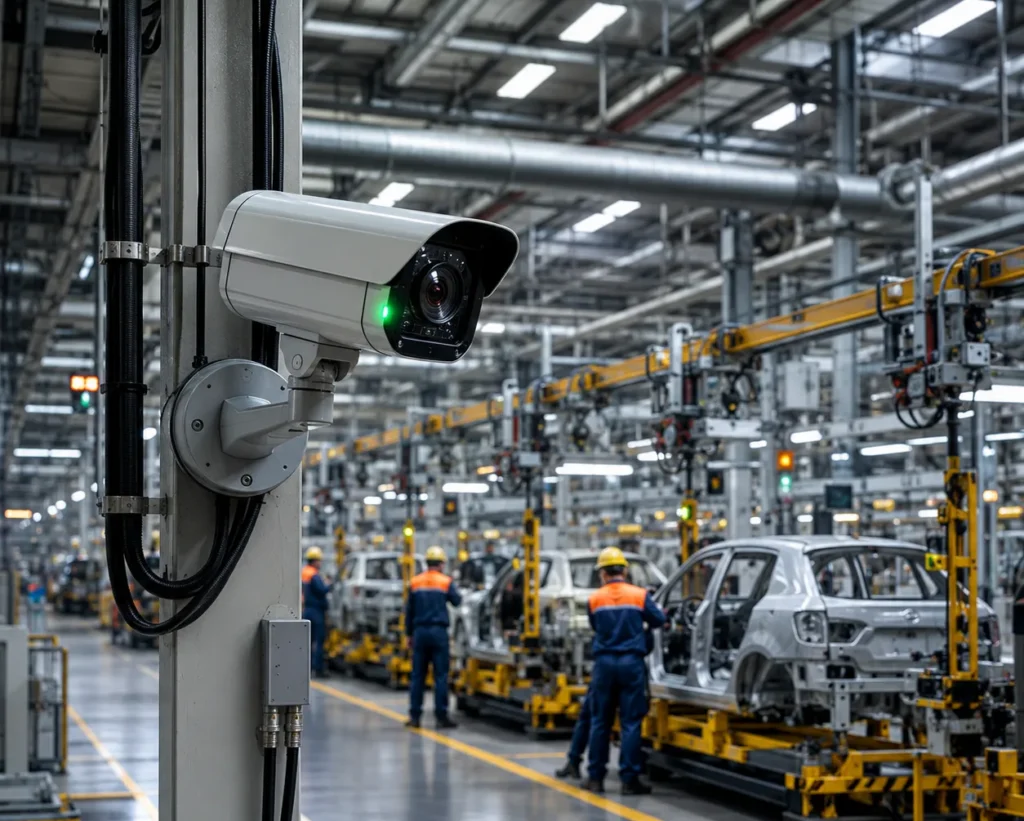
Modern organizations generate enormous amounts of video data every day. From manufacturing plants and pharmaceutical facilities to retail chains, quick service restaurants, hospitals, warehouses, banks, and transportation hubs, CCTV systems have become an important source of operational intelligence.
The challenge is not capturing video—it’s acting on what the video reveals. Delays in detecting safety incidents, compliance violations, process deviations, or security events can increase operational risk and slow decision-making. As businesses pursue faster response times, Edge Computing is emerging as a critical technology within AI-powered video analytics.
The Hidden Cost of Latency in Video Monitoring
Many traditional video analytics environments depend on sending footage to centralized servers before analysis takes place. While this approach can be effective for certain applications, it may introduce delays that impact operations.
Common business concerns include:
- Slow incident notifications
- Delayed safety interventions
- Network congestion
- Excessive bandwidth usage
- Limited performance in remote locations
- Increased investigation times
- Delayed compliance reporting
For organizations operating in highly regulated or fast-moving environments, even small delays can affect productivity, safety, and compliance outcomes.
Bringing Intelligence Closer to the Camera
Edge Computing addresses latency by processing video data closer to where it is generated. Instead of transmitting every video stream to a distant server, AI algorithms analyze events locally and generate alerts almost instantly.
This approach allows organizations to identify critical situations faster and reduce dependence on network transmission speeds.
What Happens with Edge Computing?
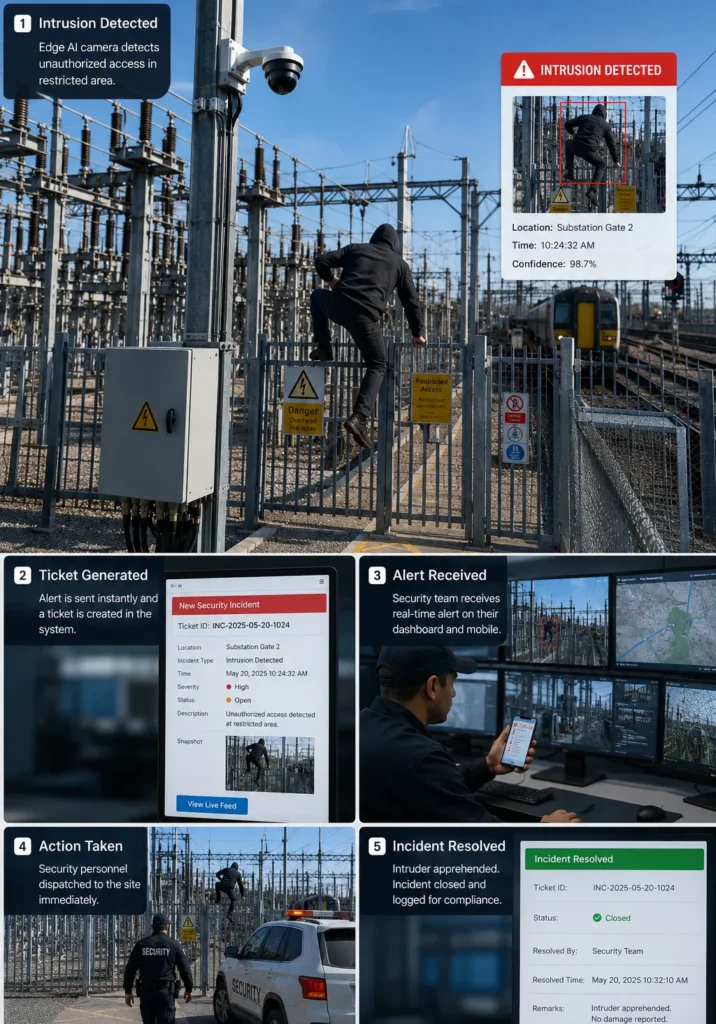
- CCTV cameras capture operational activity.
- Video is analyzed locally using AI models.
- Events are identified in real time.
- Alerts are generated immediately.
- Relevant data can be shared with centralized systems for reporting and review.
The result is faster operational awareness and improved responsiveness.
How CAPASai Supports Low-Latency Video Analytics
CAPASai combines intelligent video analytics, remote monitoring, and real-time alerting capabilities to help organizations improve operational visibility.
Using Edge AI technology, CAPASai enables businesses to:
- Detect incidents in real time
- Reduce response delays
- Monitor compliance continuously
- Improve workplace safety oversight
- Support CAPA investigations
- Reduce manual monitoring workloads
- Improve multi-site operational control
The platform supports industries including manufacturing, pharmaceuticals, retail, healthcare, banking & BFSI, logistics, hospitality, education, transportation, agriculture, dairy processing, meat processing, utilities, and e-commerce fulfillment operations.
Edge Computing vs Traditional Centralized Processing
Capability | Traditional Processing | Edge Computing |
Event Detection Speed | Dependent on transmission | Near real-time |
Bandwidth Usage | Higher | Lower |
Network Dependency | Significant | Reduced |
Remote Site Performance | Variable | Strong |
Operational Responsiveness | Moderate | Faster |
Local Decision Making | Limited | Enhanced |
For businesses seeking immediate visibility into operations, Edge Computing offers a practical advantage.
Real-World Applications Across Industries
Manufacturing
Identify unsafe behaviors, equipment misuse, and production deviations before they escalate into larger operational issues.
Pharmaceutical Operations
Support GMP compliance monitoring, hygiene verification, and restricted-area monitoring with faster event detection.
Retail & Quick Service Restaurants
Monitor service standards, store operations, and customer-facing processes without waiting for centralized analysis.
Healthcare Facilities
Enable quicker identification of operational incidents, access-control events, and workflow disruptions.
Warehousing & Logistics
Monitor loading activities, vehicle movements, and warehouse safety with minimal delay.
Why Lower Latency Improves Business Outcomes
Reducing latency is not simply a technical improvement. It creates measurable operational benefits.
Organizations can:
- Respond to incidents faster
- Improve compliance performance
- Reduce operational downtime
- Improve investigation efficiency
- Strengthen safety programs
- Increase operational visibility
- Support continuous improvement initiatives
As AI-powered monitoring becomes more common, the ability to act on events immediately is becoming a competitive advantage.