The Problem Most Organizations Don't Measure
Every enterprise invests heavily in improving productivity, reducing operational risks, and maintaining consistent standards. However, manual supervision—one of the biggest operating costs—often goes unnoticed.
A comparable pattern can be seen in any manufacturing plant, hospital, bank branch, logistics center, retail chain, or warehouse. Managers spend significant portions of their day monitoring activities, reviewing reports, checking compliance, investigating incidents, and following up on operational issues.
At first glance, this may seem like a normal part of management. However, as organizations grow across multiple locations, the cost of relying primarily on manual oversight begins to multiply.
The effort managers put out is not the problem. The challenge is that modern operations often move faster than traditional supervision methods can keep up with.
When Growth Creates Operational Blind Spots
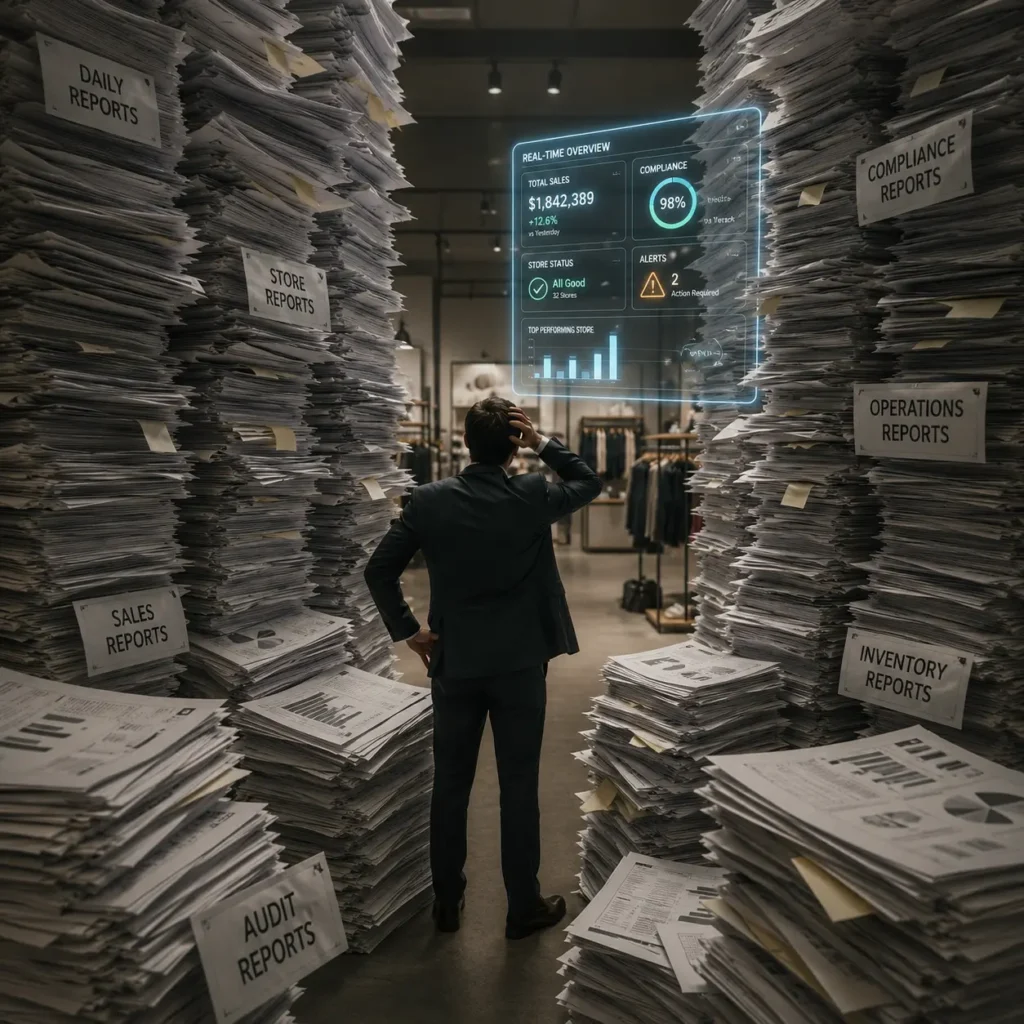
A store manager cannot watch every aisle simultaneously. A plant manager cannot always keep an eye on every process. A regional operations leader cannot physically visit dozens of locations every day.
As enterprises expand, visibility naturally decreases.
This creates a series of operational blind spots:
- Process deviations that go unnoticed
- Safety violations identified too late
- Compliance issues discovered during audits
- Service inconsistencies across locations
- Delayed responses to operational disruptions
- Increased dependence on human observation
Many organisations try to address these issues by increasing the number of supervisors, carrying out more inspections, or producing more reports. While these efforts can help, they rarely address the underlying visibility problem.
Why Traditional Oversight Models Are Being Reconsidered
For decades, manual supervision was the primary method of maintaining operational control. The approach worked because organizations operated with fewer locations, less complexity, and lower volumes of operational data.
Today’s enterprises face a different reality.
A single retail chain may operate hundreds of stores. A manufacturer may be in charge of several production sites. Healthcare providers manage large networks of hospitals and clinics. Logistics organizations coordinate activities across extensive distribution networks.
In these environments, relying solely on human observation becomes increasingly difficult.
The question is no longer whether managers are capable. The question is whether traditional supervision models can provide sufficient visibility at enterprise scale.
Compare Manual Supervision and Intelligence-Driven Monitoring
Area | Manual Supervision | Intelligence-Driven Monitoring |
Visibility | Limited by human observation | Continuous monitoring |
Issue Detection | Dependent on discovery | Real-time identification |
Response Time | Often delayed | Immediate alerts |
Compliance Oversight | Periodic reviews | Continuous verification |
Operational Consistency | Varies by location | Standardized monitoring |
Scalability | Labor intensive | Easily scalable |
Decision Support | Manual reporting | Data-driven insights |
Organizations increasingly compare these approaches as they seek more efficient operating models.
The True Cost of Manual Supervision
The cost of manual supervision extends far beyond salaries and management resources.
Delayed Decision-Making
Operational problems frequently go unnoticed until someone does. Opportunities for quick rectification may have already passed by the time information reaches decision-makers.
Inconsistent Execution
Different supervisors may interpret procedures differently. As a result, operational standards can vary significantly between locations.
Limited Scalability
As businesses expand, it becomes more challenging and costly to scale supervision models that rely significantly on people.
Information Gaps
Only a small portion of everyday actions are visible to managers. It’s possible that significant operational occurrences are never recorded or reported.
Reactive Management
Many organizations spend more time responding to problems than preventing them. This creates a cycle of constant firefighting rather than continuous improvement.

The Shift Toward Operational Intelligence
Modern enterprises are increasingly adopting technologies that provide continuous visibility into operational activities.
Rather than asking managers to watch everything, organizations are using intelligent systems to identify events that require attention.
This shift enables teams to focus on decision-making rather than constant observation.
Benefits include:
- Faster issue identification
- Improved compliance management
- Enhanced operational consistency
- Better resource utilization
- Reduced manual monitoring requirements
- Increased operational transparency
The objective is not to remove human oversight. It is to make human oversight more effective.
How CAPASai Helps Reduce the Burden of Manual Supervision
CAPASai enables organizations to transform existing CCTV infrastructure into an intelligent operational monitoring platform.
Using AI-powered video analytics, remote monitoring, and real-time alerts, CAPASai helps identify operational issues, process deviations, safety concerns, and compliance gaps as they occur.
Organisations can obtain continuous visibility into activities across various locations rather than depending solely on manual observation, freeing managers to concentrate on more important operational decisions.
This creates a more scalable and efficient approach to operational oversight.
The Future of Enterprise Supervision
The future of operational management is unlikely to depend on larger supervision teams or more manual inspections.
As enterprises continue to expand, successful organizations will increasingly combine human expertise with intelligent monitoring systems that provide continuous operational awareness.
The most effective leaders won’t be those who spend more time watching operations. They will be those who have access to the right information at the right moment and can act quickly when it matters most.
In an increasingly complex business environment, visibility is becoming a strategic advantage—and reducing dependence on manual supervision is a critical step toward achieving it.