Understanding the Challenges of Manual Auditing in CAPA Management
Organizations across manufacturing, pharmaceuticals, retail, healthcare, banking, logistics, hospitality, and other industries are under constant pressure to maintain compliance, improve operational efficiency, and prevent recurring incidents. Corrective and Preventive Action (CAPA) programs play a critical role in achieving these objectives, but many businesses still rely heavily on manual audits to identify process gaps and compliance issues.
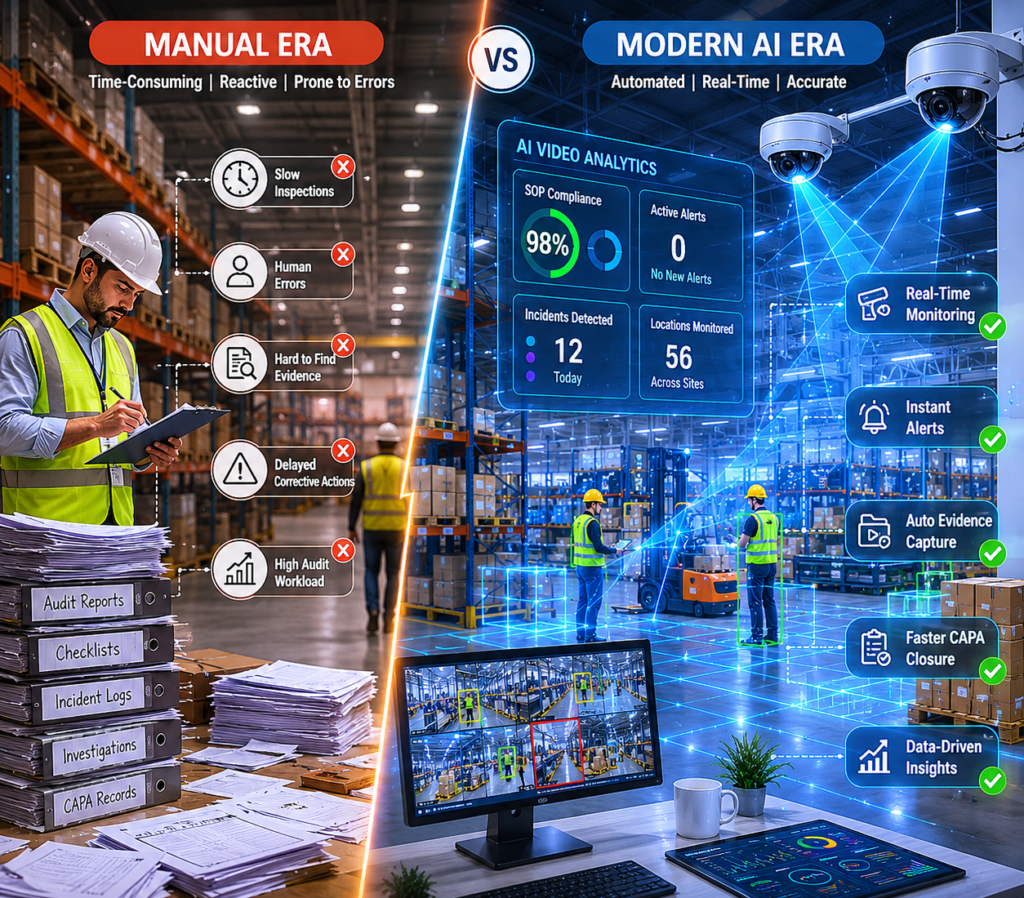
Traditional auditing methods often involve physical inspections, paper-based checklists, employee interviews, and periodic reviews of CCTV footage. While these approaches can uncover issues, they are often time-consuming, labor-intensive, and limited by human observation. As operations become larger and more complex, manual auditing alone may not provide the visibility organizations need.
Common Challenges Associated with Manual Audits
Many compliance teams spend significant time reviewing records, investigating incidents, and validating whether standard operating procedures (SOPs) are being followed consistently.
Some of the most common challenges include:
- Inconsistent audit coverage
- Delayed identification of compliance violations
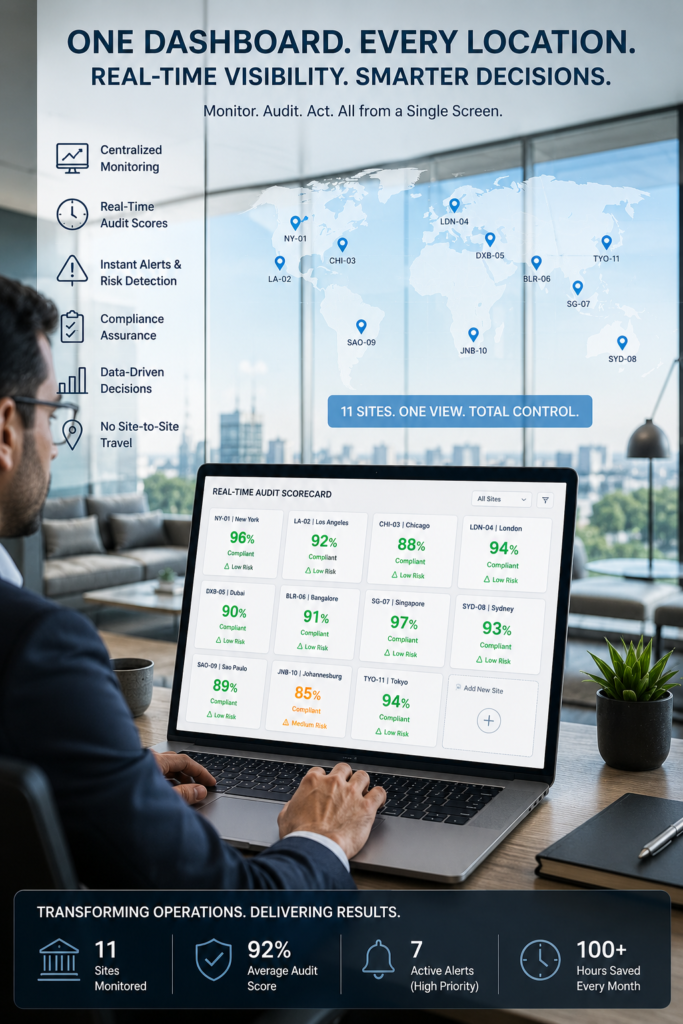
- Limited visibility across multiple locations
- Human error during inspections
- Time-consuming evidence collection
- Difficulty tracking recurring issues
- Reactive rather than proactive compliance management
These challenges can slow CAPA investigations and make it difficult to implement corrective actions before operational risks escalate.
How CAPASai Uses AI Video Analytics to Automate Monitoring
CAPASai helps organizations reduce dependence on manual auditing by combining AI-powered video analytics, remote monitoring, and real-time alerts with existing CCTV infrastructure.
Instead of relying solely on periodic audits, CAPASai continuously analyzes video streams to identify operational events, process deviations, safety concerns, compliance violations, and unusual activities.
Core Capabilities
- Intelligent video analytics
- Real-time incident detection
- Remote store and facility monitoring
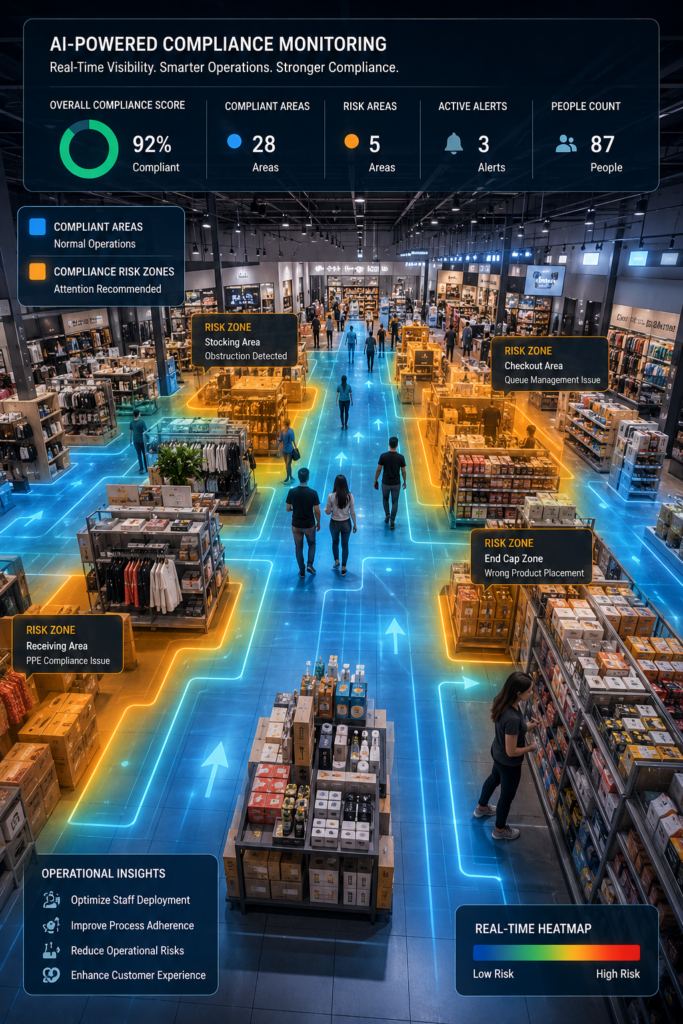
- SOP compliance monitoring
- Automated evidence collection
- Multi-site operational visibility
- Process deviation detection
- Real-time alerts for immediate action
By providing continuous monitoring, organizations can identify issues earlier and support more effective CAPA processes.
Manual Auditing vs AI Video Analytics: A Comparison
Lorem ipsum dolor sit amet, consectetur adipisc
Function | Manual Auditing | AI Video Analytics |
Monitoring Frequency | Periodic | Continuous |
Incident Detection | Human observation | Automated detection |
Evidence Collection | Manual gathering | Automated capture |
Multi-Site Visibility | Limited | Centralized monitoring |
Compliance Verification | Scheduled audits | Real-time validation |
CAPA Support | Reactive | Proactive |
ing elit. Ut elit tellus, luctus nec ullamcorper mattis, pulvinar dapibus leo.
Industry Applications
Manufacturing & Pharmaceutical Facilities
- SOP compliance verification
- GMP monitoring
- Process deviation detection
- Quality investigations
Banking & BFSI
- Branch compliance monitoring
- Security event detection
- Operational visibility
Healthcare & Hospitals
- Patient safety monitoring
- Restricted area compliance
- Incident documentation
Construction, Energy & Utilities
- PPE compliance verification
- Safety monitoring
- Hazard identification
Retail Chains & Quick Service Restaurants
- Store operations monitoring
- Food safety compliance
- Service standard verification
- Multi-location oversight
Agriculture, Dairy & Meat Processing
- Hygiene monitoring
- Production process oversight
- Operational risk reduction
Education, Hospitality, Transportation & Smart Cities
- Public safety monitoring
- Facility compliance tracking
- Infrastructure oversight
E-Commerce Fulfillment & Security Operations
- Warehouse process monitoring
- Inventory handling compliance
- Centralized surveillance management
Real-World Example Use Case
A retail chain conducts monthly audits to verify employee adherence to operational procedures. Despite regular inspections, compliance issues continue to occur between audits. By implementing AI video analytics, the organization receives real-time alerts whenever predefined SOP violations occur. Compliance teams gain immediate visibility into issues, collect supporting evidence automatically, and initiate corrective actions faster, reducing audit workloads while improving compliance outcomes.
Checklist: Reducing Manual Audits with AI
Organizations seeking to modernize CAPA management should:
✔ Identify high-risk operational processes
✔ Monitor critical activities continuously
✔ Configure automated compliance alerts
✔ Capture evidence automatically
✔ Centralize monitoring across locations
✔ Track recurring compliance trends
✔ Use operational insights to strengthen preventive actions