🏪 Overview
Retail shrinkage remains one of the most persistent and financially damaging challenges in global retail operations. Despite investments in POS systems, ERP platforms, and CCTV infrastructure, retailers continue to lose revenue due to theft, operational inefficiencies, and process violations.
Shrinkage is not limited to shoplifting. It includes:
- External theft (customer shoplifting)
- Internal theft (employee pilferage or manipulation)
- Billing errors and missed scans
- Unauthorized discounts, refunds, or overrides
- Inventory mismanagement and misplacement
- SOP non-compliance across store operations
For large retail chains, even a 1–2% shrinkage rate can translate into millions in annual losses.
The key challenge is timing—losses are typically identified only during audits, long after they occur.
❗ Problem: Reactive Systems That Fail to Prevent Losses
Traditional retail security and inventory systems suffer from structural limitations:
1. No Real-Time Visibility
Shrinkage is detected only during audits or reconciliations—making recovery impossible.
2. Manual Monitoring Limitations
Human monitoring of CCTV feeds cannot scale across multiple aisles, counters, and stores.
3. System Silos
POS, inventory systems, and CCTV operate independently, preventing correlation between behavior and transactions.
4. Complex Internal Theft Patterns
Employee-driven losses include:
- Missed or skipped scans
- Post-billing voids or cancellations
- Unauthorized discounts or refunds
- Coordinated manipulation of processes
These are extremely difficult to detect manually.
5. Operational Errors
A significant portion of shrinkage is unintentional:
- Incorrect SKU billing
- Missed barcode scans
- Product misplacement
- Checkout mistakes
6. Reactive Security Model
CCTV systems are forensic in nature—helpful for investigation, not prevention.
💡 CAPASai Solution: Real-Time AI Shrinkage Prevention System
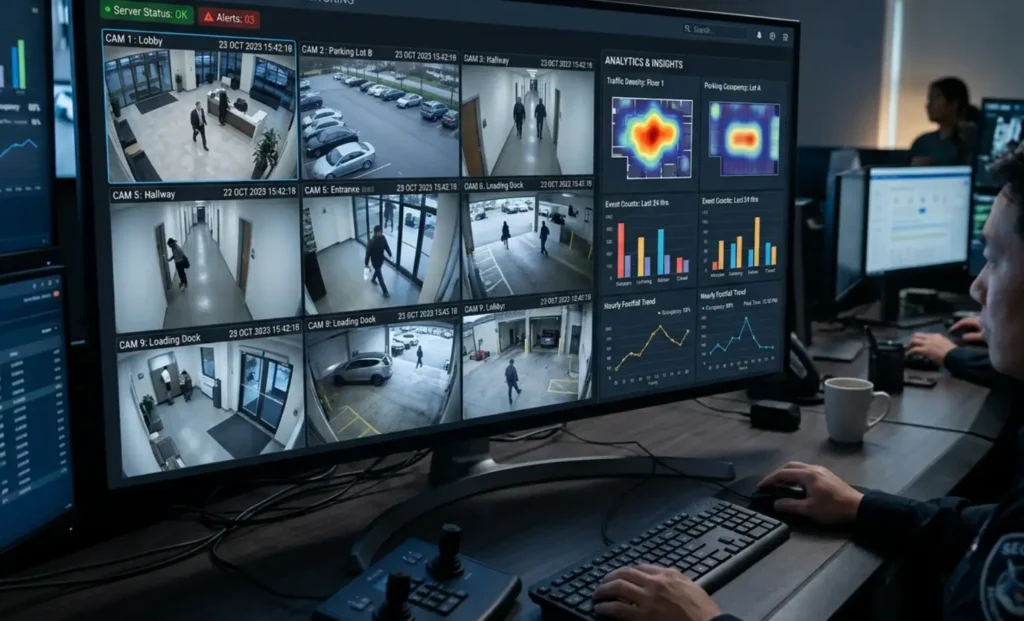
CAPASai transforms traditional CCTV into an intelligent retail monitoring and loss prevention system.
It combines AI, computer vision, and transaction intelligence to detect and prevent shrinkage in real time.
🧩 Core Capabilities
1. Computer Vision Intelligence
- Detects human-object interactions in real time
- Tracks movement across store zones
- Identifies suspicious behavior patterns
2. Behavioral Analytics Engine
- Builds normal behavior profiles per store
- Detects anomalies like concealment or repeated non-purchase activity
- Continuously learns store-specific patterns
3. POS + Video Correlation
- Matches billing data with video evidence
- Detects mismatch between item pickup and checkout
- Flags suspicious refunds, voids, and overrides
4. Real-Time Alert System
- Instant alerts to store managers and security teams
- Enables immediate intervention before loss completion
- Prioritizes high-risk events in real time
5. Centralized Multi-Store Dashboard
- Unified monitoring across all locations
- Store-wise shrinkage benchmarking
- Identification of high-risk stores, shifts, and zones
6. Automated Evidence Generation
- Instant creation of incident video clips
- Metadata tagging (time, SKU, location, camera)
- Searchable digital audit trail
🔄 How CAPASai Works (End-to-End Flow)
Step 1: System Integration
CAPASai connects with existing CCTV infrastructure and optionally integrates POS systems.
Step 2: Real-Time Store Mapping
AI continuously analyzes:
- People movement
- Product interactions
- Zone-level activity heatmaps
Step 3: Behavior Detection
System identifies:
- Concealment actions (pocketing, bag hiding)
- Unusual repeated aisle movement
- Group coordination behavior
- High-value item tracking near exits
Step 4: Transaction Verification
CAPASai cross-checks:
- Items picked vs items billed
- Void transactions and refunds
- Checkout inconsistencies
Example:
- Item picked but not billed → immediate risk alert
Step 5: Instant Alerts
Triggered alerts include:
- “Suspicious concealment detected – Aisle 3”
- “Unbilled item approaching exit zone”
- “Repeated void pattern at billing counter 2”
Step 6: Intervention or Logging
Depending on store policy:
- Immediate staff intervention
- Customer verification
- Or incident logging for audit review
Step 7: Automated Evidence Creation
Every event is:
- Converted into a video clip
- Tagged with metadata
- Stored in a centralized incident database
Step 8: Continuous Learning
CAPASai improves over time by:
- Learning store-specific behavior patterns
- Reducing false alerts
- Adapting to seasonal shopping behavior
- Identifying repeat risk zones and patterns
📊 Business Outcomes
📉 1. Shrinkage Reduction
- 20% to 60% reduction in total shrinkage
- Significant reduction in internal fraud
⚙️ 2. Operational Discipline
- Improved SOP compliance
- Reduced checkout errors
- Higher employee accountability
⚡ 3. Faster Incident Response
- From hours/days → real-time detection
- Prevention before transaction completion
🎥 4. Audit Efficiency
- Up to 70% reduction in manual video review
- Faster investigations and dispute resolution
💰 5. Revenue Impact Example
For a 50-store retail chain:
- Monthly revenue per store: $60,000
- Shrinkage rate: 2%
- Annual loss: $720,000
If CAPASai reduces shrinkage by 30%:
👉 Annual savings ≈ $216,000+
(Excludes savings from audit efficiency and operational improvements)
📍 6. Store Benchmarking Intelligence
- Compare shrinkage performance across stores
- Identify high-risk shifts or locations
- Optimize staffing and supervision strategies
🚀 Business Transformation
CAPASai transforms retail operations from:
Traditional Model | CAPASai AI Model |
Periodic audits | Continuous monitoring |
Manual CCTV review | AI-driven detection |
Reactive investigation | Real-time prevention |
Isolated systems | Unified intelligence layer |
🧭 Summary
Retail shrinkage is no longer just a security issue—it is a real-time operational intelligence problem.
CAPASai enables retailers to move from:
- Loss detection → Loss prevention
Human monitoring → AI
intelligence
- Fragmented systems → Unified visibility
The result is a measurably safer, more efficient, and more profitable retail ecosystem.