Security printing has a different definition of operational accuracy. A small deviation in an ordinary manufacturing process may create rework; in currency, security paper, passports, stamps, certificates, and other protected products, process discipline is part of the security architecture. Security Printing and Minting Corporation of India Limited operates specialised presses, mints, and a security paper mill. AI based SOP analytics and video analytics can therefore strengthen control over sensitive production environments.
The Control Architecture Should Begin With Exceptions
For SPMCIL, useful AI questions often concern what does not happen as expected. A production step takes longer than normal. An inspection is recorded late. A controlled material movement does not match the expected sequence. A corrective action remains open. A restricted area records an unusual access event.
AI based SOP analytics can examine these patterns across defined workflows using production records, inspection checklists, maintenance logs, quality-control records, material movement documentation, incident reports, and corrective-action histories.
Instead of treating every exception equally, analytics can classify recurring patterns by process, facility, equipment, shift, or risk category.

Why Recurrence Matters
A single deviation may have an unusual cause. Repeated deviations are more informative. If a maintenance check is frequently delayed or the same production stage repeatedly generates corrective actions, SPMCIL can investigate whether the issue relates to equipment reliability, workflow design, training, resources, or procedure clarity.
This makes SOP analytics useful for prevention rather than only retrospective compliance.
Different Units Need Different Analytical Priorities
SPMCIL’s units do not all manufacture the same products. Currency Note Press and Bank Note Press handle banknote production; Security Paper Mill produces security paper; India Security Press and Security Printing Press manufacture protected documents and other security products; India Government Mints produce circulation and commemorative coins.
Each environment therefore needs its own analytical priorities.
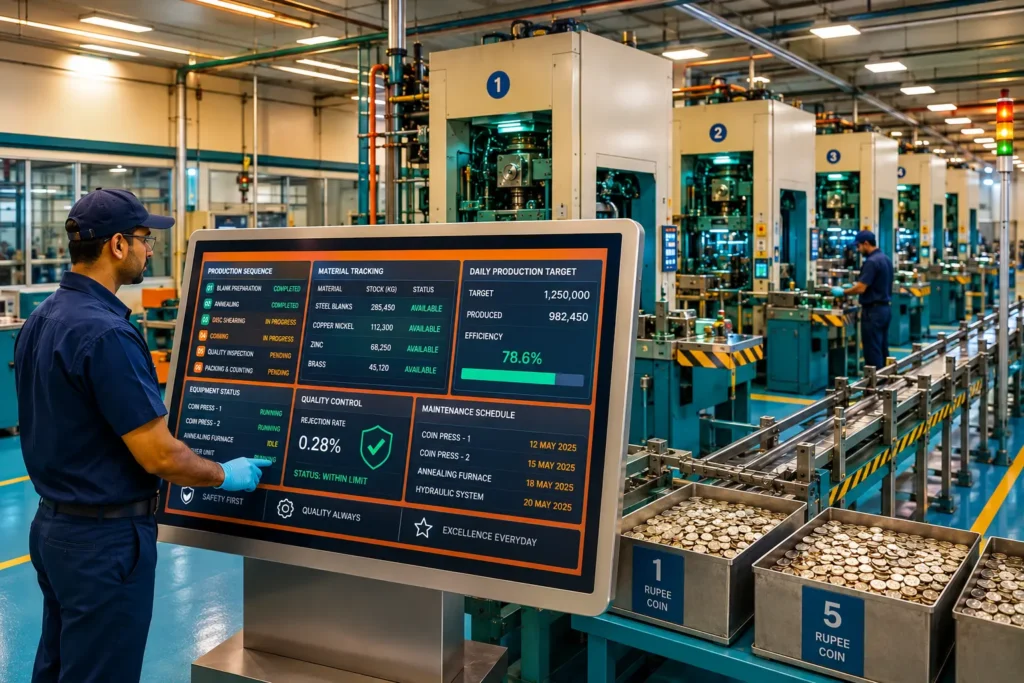
For currency and security printing, SOP analytics could focus on production-stage controls, quality inspections, security-item accounting, controlled material handling, and maintenance procedures.
For the security paper mill, analytics could focus on process checks, equipment inspections, material handling, and quality-control steps. For mints, the emphasis could shift toward production sequencing, material accounting, quality checks, and secure movement.
Video Analytics For Controlled Physical Spaces
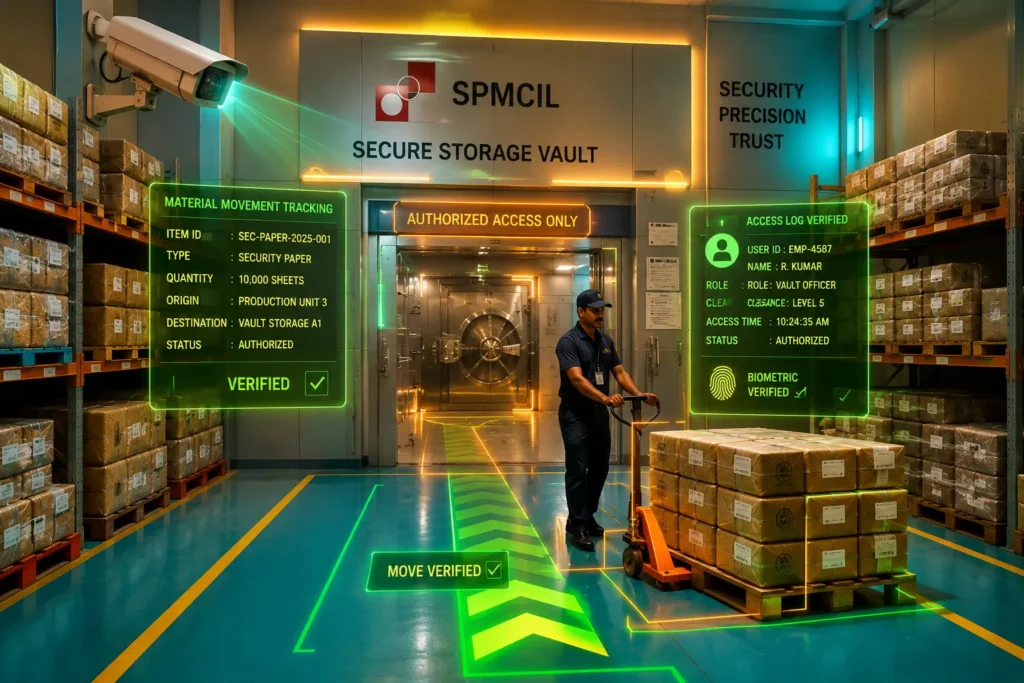
Video analytics can provide a second layer of control where suitable surveillance infrastructure exists. Its value is not simply counting people or vehicles. It can identify predefined events that require investigation.
Potential applications include detecting entry into restricted production areas, identifying movement through controlled access points, monitoring selected material-handling zones, detecting unusual activity around secure storage, and supporting incident reconstruction.
Different camera zones can have different rules. A production floor may require equipment-area monitoring, while a secure storage area may prioritise access events.
Video analytics should generate alerts for authorised teams to review, not automatically determine that a security breach has occurred.
.
Material Accountability Is A Natural AI Use Case
Security printing and minting depend on controlled materials and products moving through defined stages. SOP analytics can compare recorded material receipts, production usage, transfers, rejects, and finished-product movements where suitable digital records exist.
If an unusual discrepancy occurs, analytics can help identify the stage or location where the pattern first appeared. This narrows the investigation.
Video analytics can provide supporting context around relevant handling areas, access points, or movement periods. Neither system should independently establish loss, misuse, or responsibility; physical verification and established security procedures remain essential
Incident Investigation Can Become More Structured
When an operational or security incident occurs, investigators may need SOP records, maintenance history, access information, production logs, and video footage.
SOP analytics can identify relevant process exceptions and time windows. Video analytics can help locate predefined events in the corresponding physical area. Investigators can then compare these findings with authorised records and human observations.
This can reduce manual searching while preserving professional judgement.
A High-Control Pilot Is The Sensible Starting Point
SPMCIL can begin with a tightly defined use case rather than deploying analytics across every sensitive environment. A pilot could focus on controlled-area access, material movement, recurring SOP deviations, quality-related exceptions, or incident investigation.
Success should be measured through fewer repeated deviations, faster investigations, improved corrective-action closure, better inspection completion, and relevant video-alert performance.
Because the organisation handles sensitive production and security information, governance is fundamental. Role-based access, data minimisation, retention controls, cybersecurity, audit trails, model validation, and human review should be designed into the system from the start.
For SPMCIL, AI based SOP analytics and video analytics can strengthen a procedure-driven operating environment by making exceptions easier to detect, investigate, and learn from. The goal is not to automate security decisions, but to provide authorised teams with better evidence for protecting process integrity, material accountability, product quality, and secure operations.
FAQs
It can identify recurring deviations across production, inspection, maintenance, material handling, quality, and corrective-action workflows.
Yes. It can support defined access, movement, restricted-zone, and incident-monitoring use cases where suitable infrastructure and governance controls exist.
It can analyse defined records and provide supporting evidence around material movement, while physical verification and established security controls remain essential
Yes. Each facility can use rules aligned with its products, equipment, workflows, and security requirements while sharing a common analytical framework.
Useful measures include repeated SOP deviations, corrective-action closure time, investigation duration, inspection completion, and video-alert relevance and accuracy.