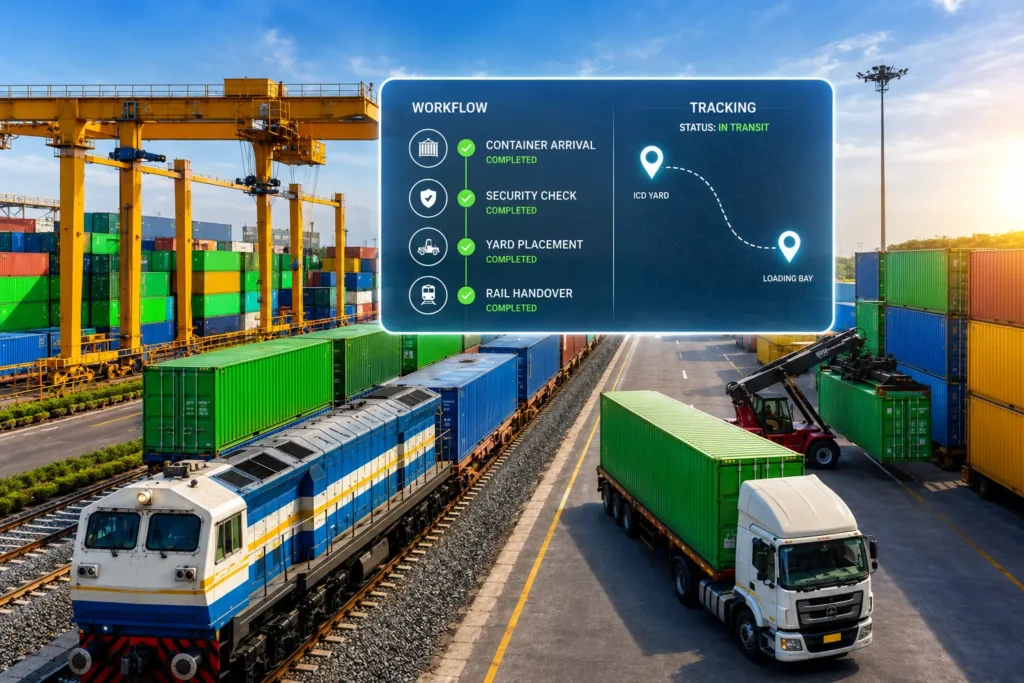
For Container Corporation of India Limited, a container rarely moves through just one operational environment. It may pass through an Inland Container Depot, rail network, road interface, warehouse, loading area, or multimodal logistics facility before reaching its destination. With CONCOR operating a large terminal network and supporting rail, road, warehousing, and end-to-end logistics services, operational visibility becomes critical. AI based SOP analytics and video analytics can help connect these physical movements with the procedures governing them.
Five Operational Questions AI Can Help Answer
Instead of treating AI as another monitoring layer, CONCOR can use it to answer specific management questions:
- Where are terminal processes repeatedly slowing down?
- Which SOP deviations are occurring often enough to require intervention?
- Where do physical container movements differ from expected workflows?
- Which incidents require faster investigation?
- Are corrective actions actually reducing recurrence?
This approach gives analytics a clear operational purpose. It also allows different terminals and logistics functions to use AI according to their own requirements.
Terminal Productivity Begins With Process Discipline
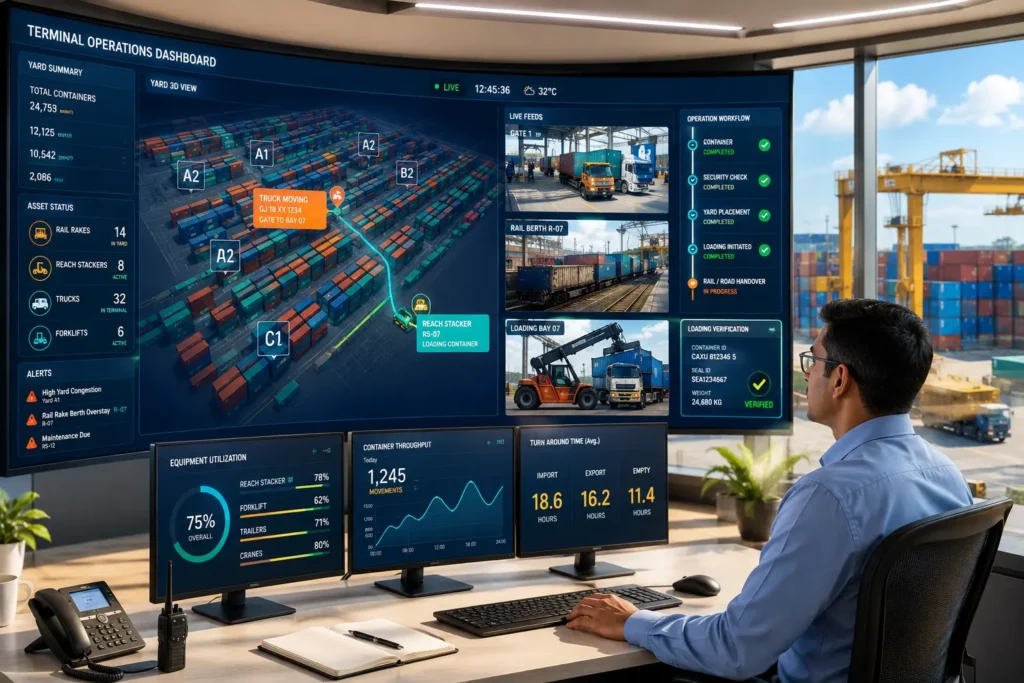
CONCOR terminals involve container receipt, yard positioning, handling, rail operations, road interfaces, stuffing and destuffing, warehousing, and dispatch. Each activity can contain multiple procedural checkpoints.
AI based SOP analytics can examine terminal records, inspection checklists, equipment logs, work orders, incident reports, movement records, and corrective actions. It can identify repeated delays or deviations by terminal, activity, equipment category, shift, or process stage.
For example, if container handling repeatedly takes longer than expected at a particular stage, analytics can help identify whether the pattern is associated with equipment availability, yard congestion, documentation, staffing, or another operational condition.
The system should identify the pattern; terminal teams should determine the cause.
Container Visibility Needs More Than Location Data
CONCOR has already introduced AI/ML-based container terminal management capabilities, including real-time 3D stack-location tracking at ICD Tughlakabad. This creates an important foundation for combining digital container information with visual intelligence.
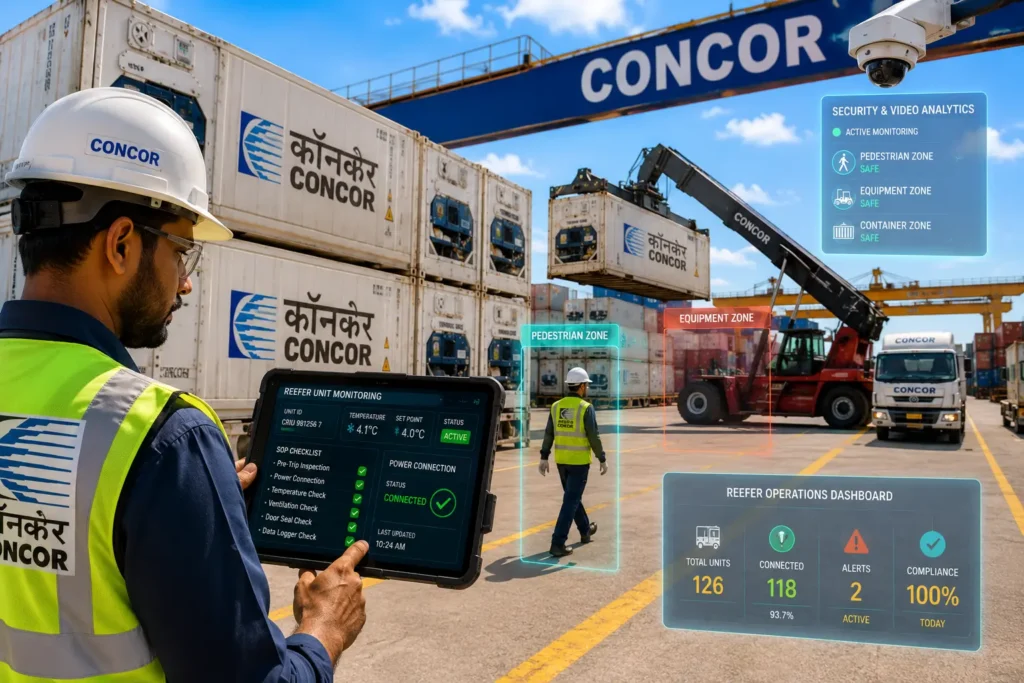
Video analytics can add physical context by analysing suitable camera feeds around yards, gates, loading areas, and other operational zones.
Potential applications include detecting:
- Unauthorised entry into controlled terminal areas.
- Vehicles entering defined restricted zones.
- Unusual activity around container stacks.
- Pedestrian movement in designated equipment areas.
- Loading or unloading events requiring verification.
- Conditions relevant to incident investigation.
The purpose is not to duplicate container tracking. It is to understand physical events that structured location data may not fully explain.
Rail-Road Coordination Is A Natural AI Use Case
CONCOR’s multimodal model depends on coordination between rail and road operations. A delay at one interface can affect subsequent handling and customer commitments.
SOP analytics can examine whether defined handover, documentation, loading, scheduling, and dispatch procedures are completed within expected timeframes. Repeated exceptions can reveal where coordination is becoming a bottleneck.
Video analytics can provide supporting information around gates, truck movement, loading areas, and terminal interfaces. This may help teams understand whether physical congestion, vehicle queues, restricted access, or unusual activity contributed to a delay.
Special Cargo Requires Special Analytics
CONCOR handles different container types, including refrigerated, tank, platform, open-top, and other specialised containers. Their operational requirements are not identical.
For refrigerated containers, SOP analytics can focus on defined inspection, power-connection, monitoring, and handling procedures. Video analytics may support access and equipment-area monitoring.
For tank or hazardous cargo, analytics can be configured around designated handling and restricted zones, while established safety and regulatory procedures remain the primary control framework.
Investigations Can Become Faster And More Structured
A container-related incident may involve movement records, terminal logs, equipment information, access records, and camera footage. Finding the relevant information manually can take time.
SOP analytics can narrow the operational window and identify which process steps were scheduled or recorded as exceptions. Video analytics can then help locate relevant visual events around the same time and location.
Measure The Result At Terminal Level
A practical AI programme should demonstrate operational improvement rather than simply generate alerts.
CONCOR could evaluate pilots using measures such as:
- Reduced recurring SOP deviations.
- Faster terminal incident investigation.
- Improved completion of critical inspections.
- Reduced avoidable handling delays.
- Better relevance of video alerts.
- Faster closure of corrective actions.
Governance Should Travel With The Technology
CONCOR’s logistics environment involves commercially sensitive cargo information, operational records, surveillance footage, and access-controlled facilities. AI deployments therefore require clear rules for data access, retention, cybersecurity, auditability, and human review.
Automated alerts should support operational decisions rather than independently determine fault, security violations, or employee responsibility.
For Container Corporation of India Limited, the strongest opportunity is to combine process intelligence with physical visibility. AI based SOP analytics can reveal where terminal and logistics procedures repeatedly diverge from expectations, while video analytics can provide context around what is happening on the ground. Together, they can support safer terminals, more consistent workflows, faster investigations, and stronger multimodal logistics performance.
FAQs
It can identify recurring delays, incomplete procedures, inspection gaps, and corrective-action patterns across terminal and logistics workflows.
Yes. Tracking systems provide structured movement information, while video analytics can add visual context around gates, yards, loading areas, and operational zones.
SOP analytics can monitor defined procedures around refrigerated-container handling, while video analytics can support access and equipment-area monitoring where appropriate.
Yes. Relevant operational records and video events can be identified more efficiently, giving investigation teams additional evidence for review.