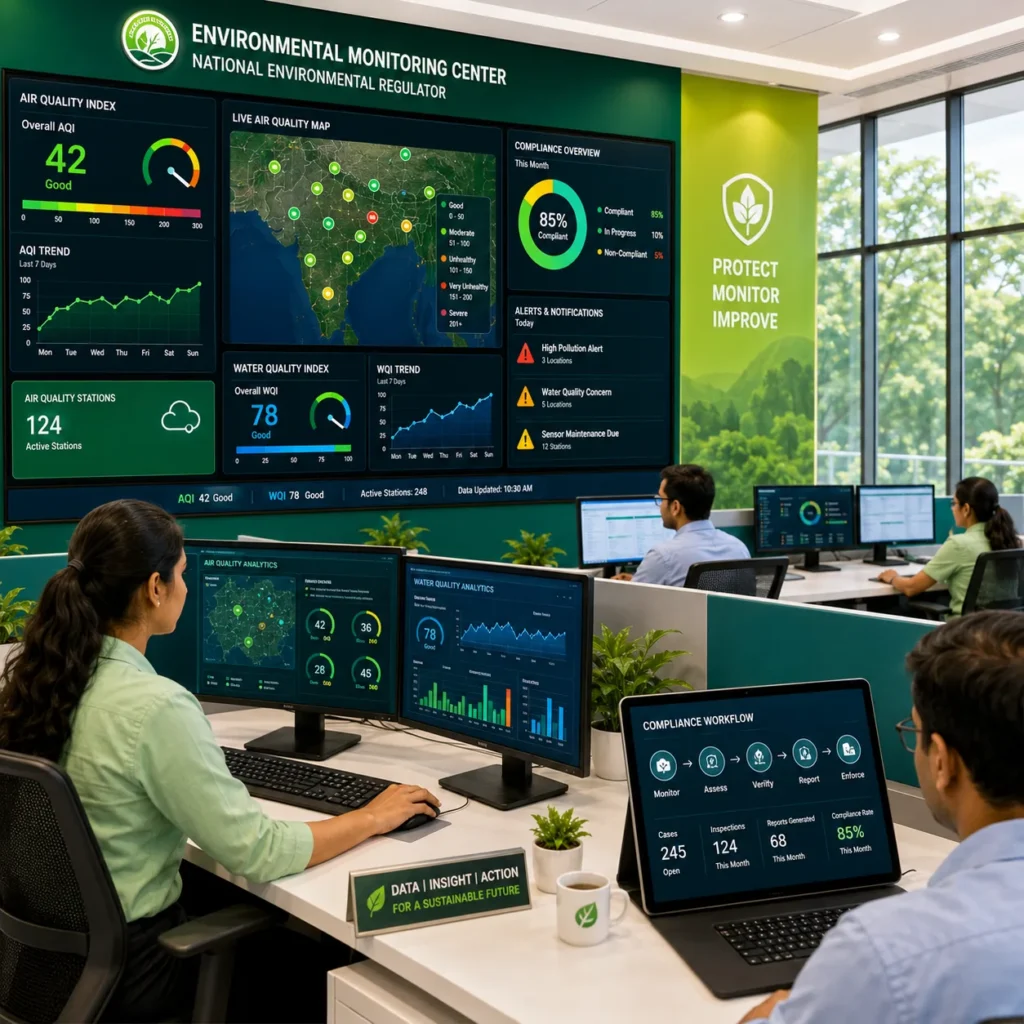
For a national environmental regulator, the difficult question is rarely whether data exists. The challenge is deciding which signals deserve attention, whether a reported condition matches field reality, and where regulatory resources should be directed first. The Central Pollution Control Board works across pollution control, environmental monitoring, standards, technical guidance, and coordination with state pollution control authorities. AI based SOP analytics and video analytics can strengthen this chain by turning operational information into prioritised evidence.
Start With The Regulatory Signal
CPCB can use AI based SOP analytics to examine how monitoring and regulatory procedures are executed across programmes and facilities.
Relevant records may include inspection checklists, sampling schedules, laboratory workflows, compliance reports, corrective actions, and follow-up inspections. Analytics can identify recurring delays, incomplete steps, inconsistent documentation, or corrective actions that remain unresolved.
The important shift is from asking whether an inspection was completed to asking whether the regulatory process is producing timely and reliable outcomes.
Start With The Regulatory Signal
CPCB can use AI based SOP analytics to examine how monitoring and regulatory procedures are executed across programmes and facilities.
Relevant records may include inspection checklists, sampling schedules, laboratory workflows, compliance reports, corrective actions, and follow-up inspections. Analytics can identify recurring delays, incomplete steps, inconsistent documentation, or corrective actions that remain unresolved.
The important shift is from asking whether an inspection was completed to asking whether the regulatory process is producing timely and reliable outcomes.
Finding Patterns That Merit Investigation
AI can compare procedural deviations across regions, industry categories, facilities, inspection types, or time periods.
For example, repeated delays in follow-up action after a non-compliance finding may indicate a workflow bottleneck. A cluster of unusual monitoring results may justify closer review and field verification. Analytics can help prioritise investigative attention without automatically treating a signal as proof of non-compliance.
Connecting Monitoring Data With SOP Performance
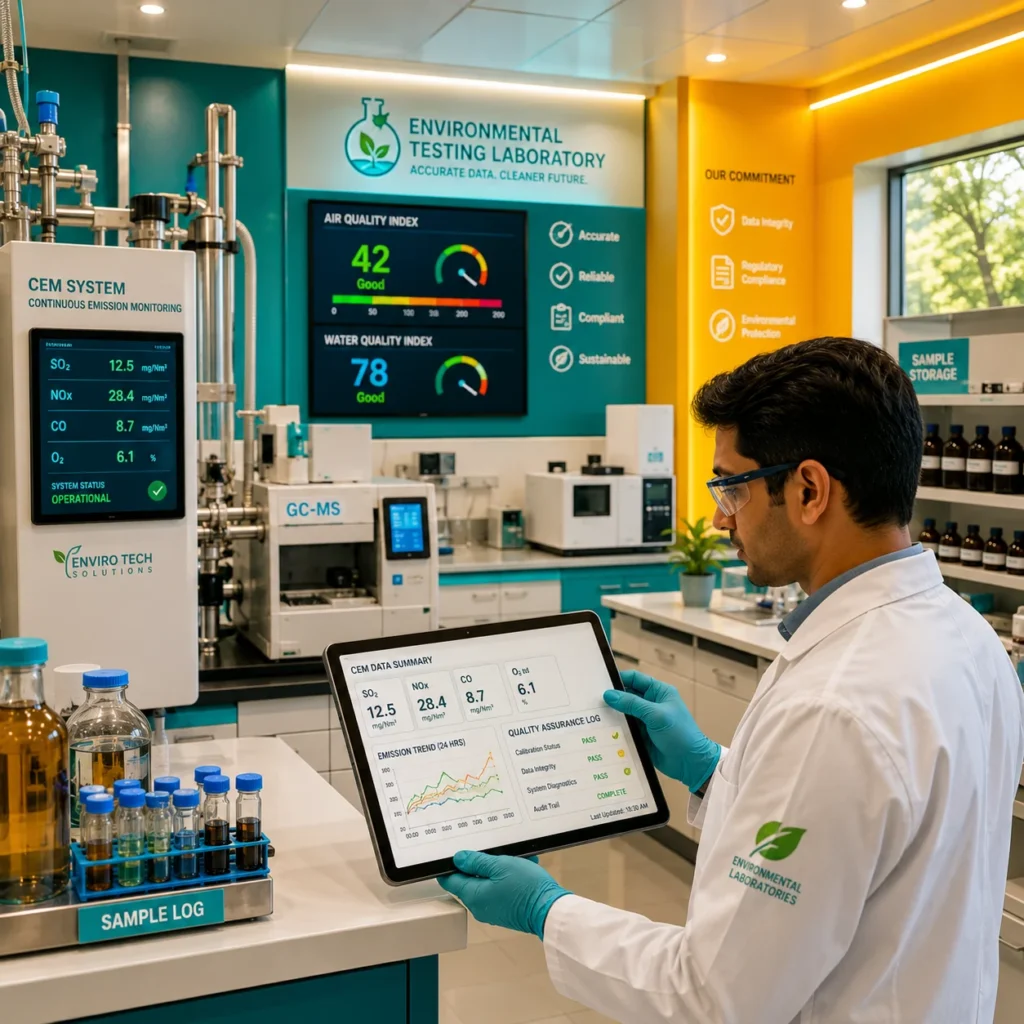
Environmental monitoring draws information from continuous monitoring systems, laboratories, and inspections. CPCB’s continuous emission monitoring framework includes data acquisition, handling, and transmission.
AI based SOP analytics can examine whether supporting monitoring procedures function consistently. It can flag missing data intervals, delayed validations, repeated exceptions, or unusual patterns for technical review.
This matters because data quality is as important as data volume. Automated findings should identify where examination is needed, while authorised technical personnel determine data validity and appropriate action.
Video Analytics For Environmental Field Operations
Environmental compliance is not entirely visible in databases. Physical conditions around industrial sites, treatment facilities, waste-handling areas, drains, storage yards, and monitoring locations can provide additional context.
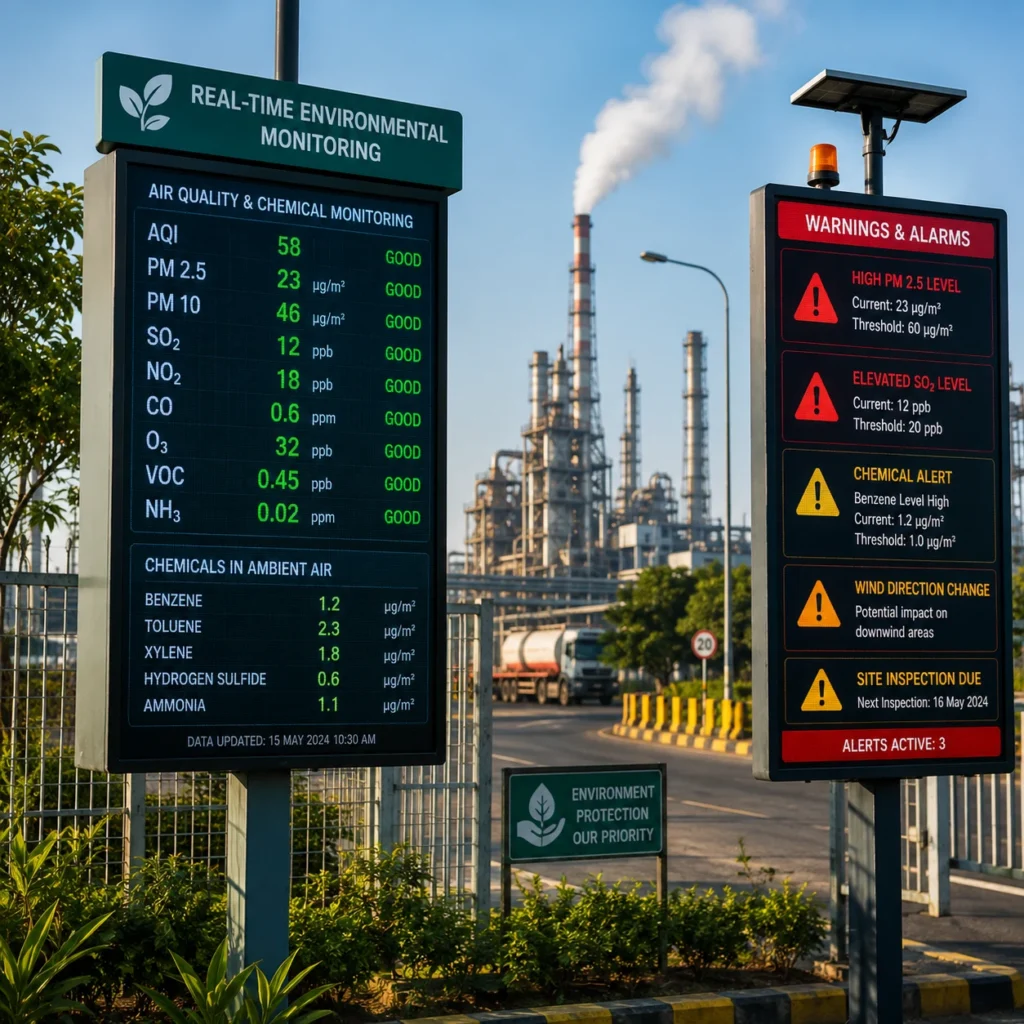
Where suitable cameras are available, video analytics can identify predefined visual events for human review.
Potential applications include:
- Detecting activity in restricted environmental-control zones.
- Identifying visible smoke or abnormal plume-like events for verification.
- Monitoring movement around waste storage or handling areas.
- Detecting unauthorised access to monitoring or treatment facilities.
- Supporting investigation of visible operational events.
Video analytics should supplement, not replace, prescribed sampling, laboratory analysis, inspection procedures, or regulatory judgement.
A Field Verification Layer For Regulatory Teams
The strongest use of video analytics may be helping teams decide where field verification is useful.
Suppose SOP analytics identifies repeated irregularities in inspection records at a facility and monitoring data shows an unusual pattern. If relevant video evidence indicates a corresponding operational event, investigators gain additional context for deciding what to examine next.
AI does not establish a violation. It creates a more structured path from signal to verification.
Supporting Waste And Treatment Facility Oversight
Waste processing, storage, and treatment facilities have distinct operational risks. SOP analytics can examine whether inspections, monitoring routines, maintenance activities, recordkeeping, and corrective actions are completed as defined.
Video analytics can support selected facilities by identifying access events, movement in designated areas, or other predefined visual conditions.
Different models should be used for different facility types. A waste storage yard does not present the same visual or procedural environment as a sewage treatment facility or an industrial emission-monitoring location.
Prioritising Regulatory Resources
CPCB and associated regulatory teams cannot investigate every signal with the same intensity. AI can support risk-based prioritisation using recurrence, severity, data confidence, facility characteristics, and previous corrective-action history.
A facility with one isolated anomaly may require routine review. Repeated procedural exceptions combined with unusual monitoring patterns and unresolved actions may warrant deeper examination.
This helps technical teams focus on cases where additional investigation is likely to be valuable.
Building An Auditable AI Framework
A practical CPCB pilot could focus on inspection follow-up, continuous monitoring data quality, treatment-facility oversight, or environmental incident investigation.
The pilot should measure whether AI improves detection and prioritisation without increasing false alerts. Useful indicators include follow-up time, recurring procedural deviations, data-quality exceptions, investigation time, corrective-action closure, and video-alert relevance.
Governance should include access controls, data-retention policies, cybersecurity safeguards, model validation, and human review. Regulatory decisions should remain with authorised officials and technical experts.
For the Central Pollution Control Board, AI based SOP analytics and video analytics can strengthen the evidence chain between monitoring, procedure, field conditions, and regulatory action. Used carefully, they can help identify patterns earlier, focus investigative resources, and make environmental oversight more consistent without turning automated alerts into automatic regulatory conclusions.
FAQs
It can identify recurring gaps in inspection, monitoring, follow-up, documentation, corrective-action, and other defined regulatory workflows
It can identify selected visible events, such as smoke-like activity, but alerts should trigger verification rather than replace prescribed sampling and technical assessment.
AI can help identify missing data, unusual patterns, or procedural exceptions for technical review. Regulatory conclusions should rely on authorised monitoring and assessment processes.
Yes. At suitable facilities, it can support restricted-area monitoring, movement detection, and investigation of predefined operational events.
A focused pilot around inspection follow-up, monitoring-data quality, treatment-facility oversight, or environmental incident investigation can provide measurable evidence before broader deployment.