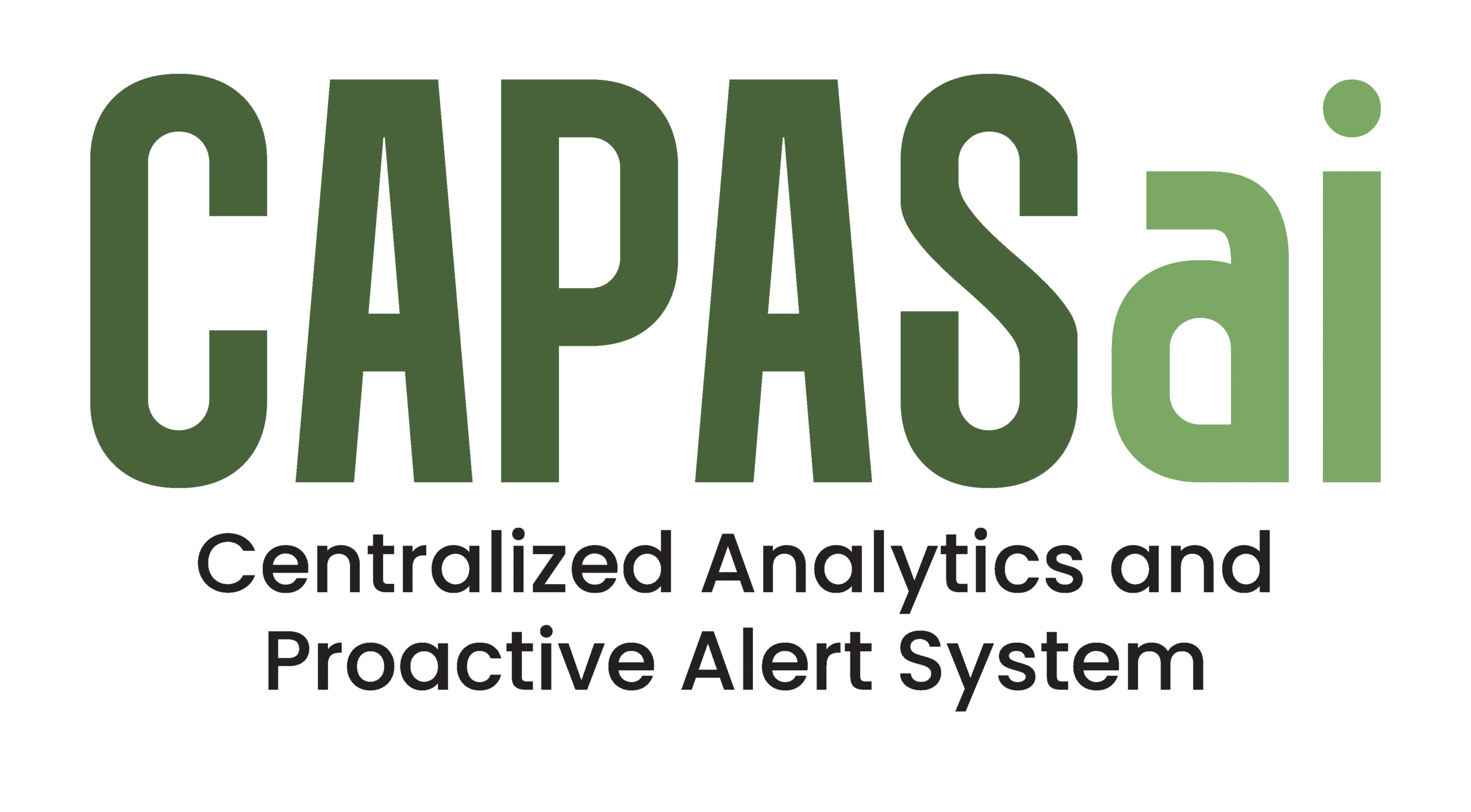
A public health engineering department is judged by infrastructure that citizens rarely notice when it works properly. Water treatment must remain reliable, pumping systems must function, sanitation facilities need maintenance, drainage assets require attention, and field teams must respond when infrastructure fails. Because these responsibilities involve dispersed assets and time-sensitive procedures, small operational gaps can develop into service disruptions. AI based SOP analytics and video analytics can help departments identify those gaps earlier and strengthen control over essential infrastructure.
The Real Challenge Is Managing Exceptions
Routine operations are usually well understood. The greater management challenge lies in exceptions: an inspection that was missed, a maintenance action that remained open, an unusual equipment event, or a recurring complaint that keeps returning after corrective work.
AI based SOP analytics can be designed around these exceptions. It can examine work orders, inspection records, maintenance schedules, equipment observations, laboratory records, safety checklists, complaints, and corrective-action data to identify patterns that deserve attention.
Instead of generating another routine compliance report, the system can help answer:
- Which procedures repeatedly fail to meet expected timelines?
- Which facilities generate unusually high numbers of exceptions?
- Which corrective actions remain unresolved?
- Are particular equipment categories associated with recurring failures?
- Where are operational problems becoming repetitive rather than isolated?
Applying Analytics Across The Engineering Lifecycle
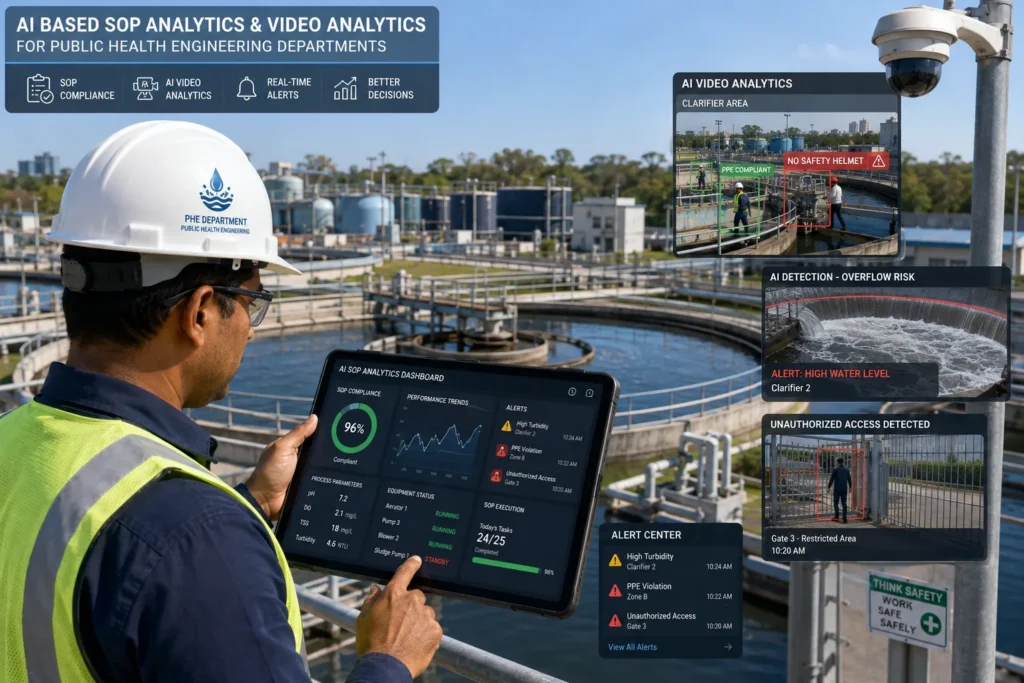
Public health engineering work extends from planning and commissioning to operation, maintenance, emergency response, and rehabilitation. AI based SOP analytics can support each stage by comparing expected procedures with recorded execution.
During preventive maintenance, it can identify missed inspections or recurring equipment observations. During breakdown response, it can examine response and closure timelines. After corrective work, it can track whether the same problem returns.
This creates a valuable distinction between completing a task and resolving a problem. A work order marked closed may not necessarily mean that the underlying issue has disappeared.
Finding Patterns Behind Recurring Failures
Analytics can compare recurring exceptions by facility, asset, location, contractor, maintenance category, or operating period. This can help engineering teams investigate whether problems stem from ageing equipment, unsuitable maintenance intervals, difficult site conditions, resource constraints, or procedural weaknesses.
The result is a more evidence-based basis for improving SOPs and maintenance practices.
Video Analytics For Engineering Facilities
Engineering departments often manage treatment plants, pumping stations, reservoirs, sewage facilities, workshops, storage areas, and other locations where physical monitoring is important.
Video analytics can add an event-detection layer to suitable surveillance systems. Rather than requiring staff to watch every camera continuously, it can flag predefined conditions for review.
Potential applications include:
- Unauthorised entry into restricted engineering areas.
- Personnel entering designated equipment or hazard zones.
- Unusual movement around pumping or treatment equipment.
- Vehicle activity within controlled facility areas.
- Monitoring selected work zones during maintenance activities.
- Locating relevant footage during incident investigations.
Water And Wastewater Require Different Analytical Rules
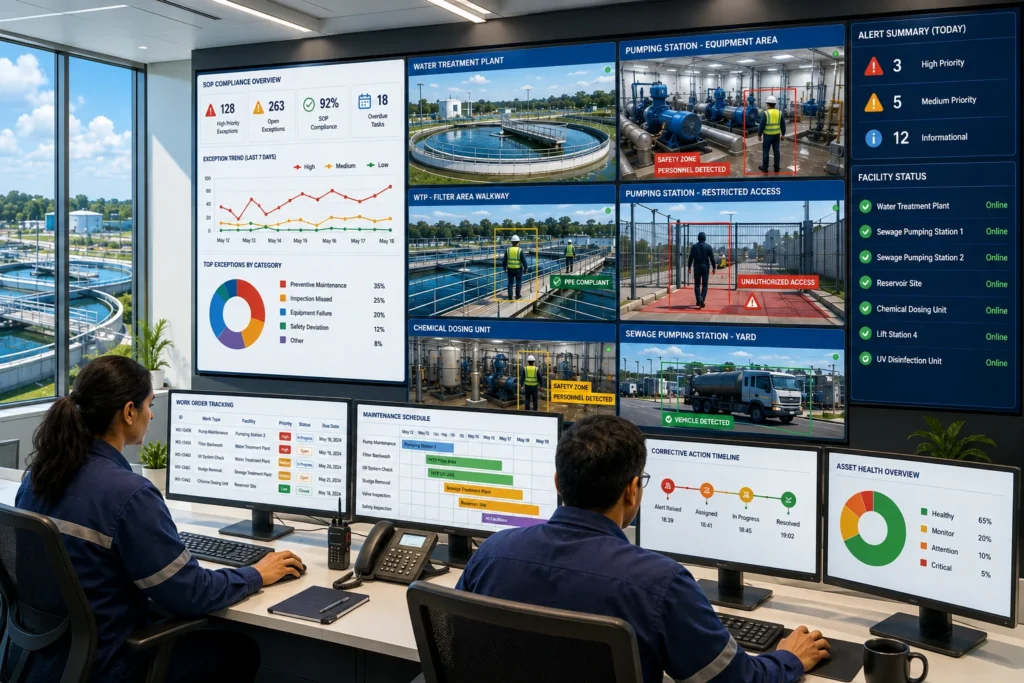
A treatment plant and a sewerage pumping station do not present the same operational environment. AI systems should therefore be configured around the specific risks and procedures of each facility.
For water-treatment operations, SOP analytics may focus on inspection routines, equipment checks, treatment-process documentation, maintenance actions, and emergency procedures.
Combining Process Records With Visual Evidence
The strongest use case can emerge when SOP analytics and video analytics answer different parts of the same investigation.
Suppose a pumping station records repeated maintenance deviations. SOP analytics identifies the recurring pattern and shows when the issue occurs. Relevant video footage can then provide context about access, activity, equipment surroundings, or maintenance work during those periods.
The combination does not automatically establish the cause. Instead, it gives engineers additional evidence to investigate whether the issue relates to operating conditions, work practices, equipment access, or another factor
Supporting Emergency Preparedness
Public health engineering departments also need to prepare for events such as flooding, equipment failure, contamination risks, power interruptions, and other service emergencies.
SOP analytics can review whether preparedness inspections, emergency equipment checks, backup arrangements, and response procedures have been completed on schedule.
Video analytics can provide additional awareness at selected facilities during an emergency by identifying defined access, movement, or equipment-area events.
A Practical Route To Implementation
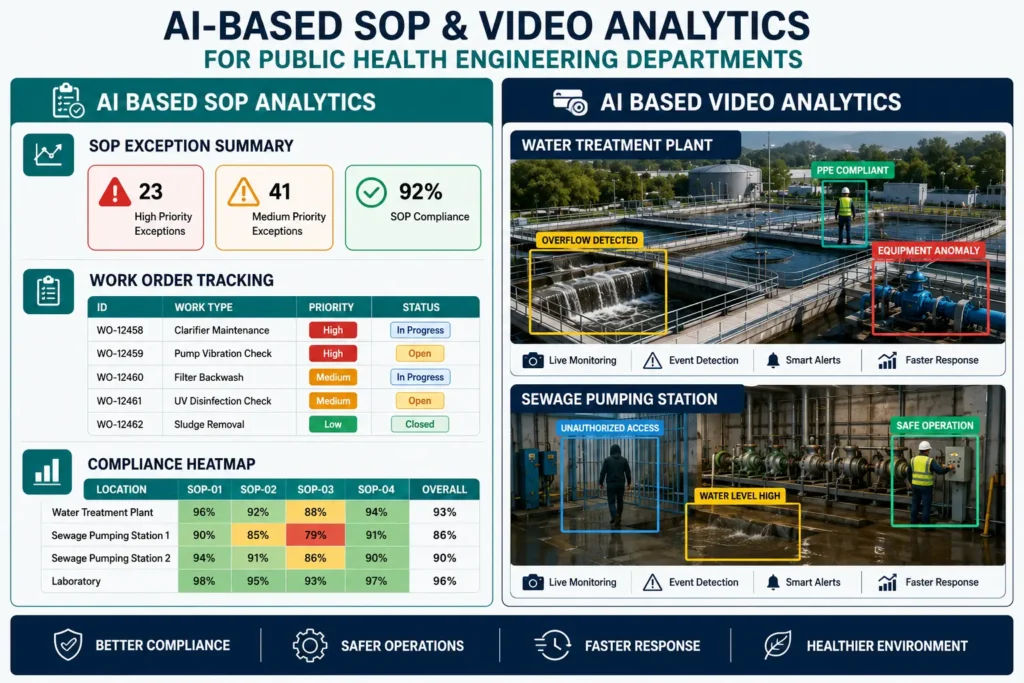
A department does not need to begin with every asset and every camera. A focused pilot could target one recurring engineering problem, such as preventive-maintenance compliance, facility access, pumping-station safety, or incident investigation.
The pilot should establish baseline performance and define measurable outcomes, including fewer repeated SOP deviations, faster corrective-action closure, improved inspection completion, quicker incident investigation, or better alert relevance.
For public health engineering departments, AI is most valuable when it strengthens engineering judgement rather than attempting to replace it. SOP analytics can reveal where processes repeatedly diverge from expectations, while video analytics can add context from the physical environment. Together, they can support more reliable infrastructure management, safer field operations, and more disciplined preventive maintenance.
Preventive maintenance, inspections, emergency preparedness, work-order management, equipment checks, safety procedures, and corrective-action workflows are potential starting points.
Yes. Suitable facilities can use event-based video analytics for defined access, movement, safety, and operational monitoring requirements.
AI can identify patterns and provide supporting evidence, but engineering professionals should investigate the evidence and determine the actual technical cause.
It can track whether defined preparedness procedures and inspections are completed and help identify recurring gaps before an emergency occurs.