For a city as dense and operationally complex as Mumbai, municipal performance is often determined by what happens between a complaint being raised and a field team completing the required action. Roads, solid waste, drainage, water supply, public spaces, and emergency services generate thousands of operational interactions. For Brihanmumbai Municipal Corporation (BMC), AI based SOP analytics and video analytics can help turn these activities into measurable service-delivery intelligence.
A Service Request Is Only The Beginning
Municipal work typically moves through several stages: an issue is identified, a task is assigned, field personnel respond, work is completed, and the result is verified. Weakness at any stage can create delays or repeat complaints.
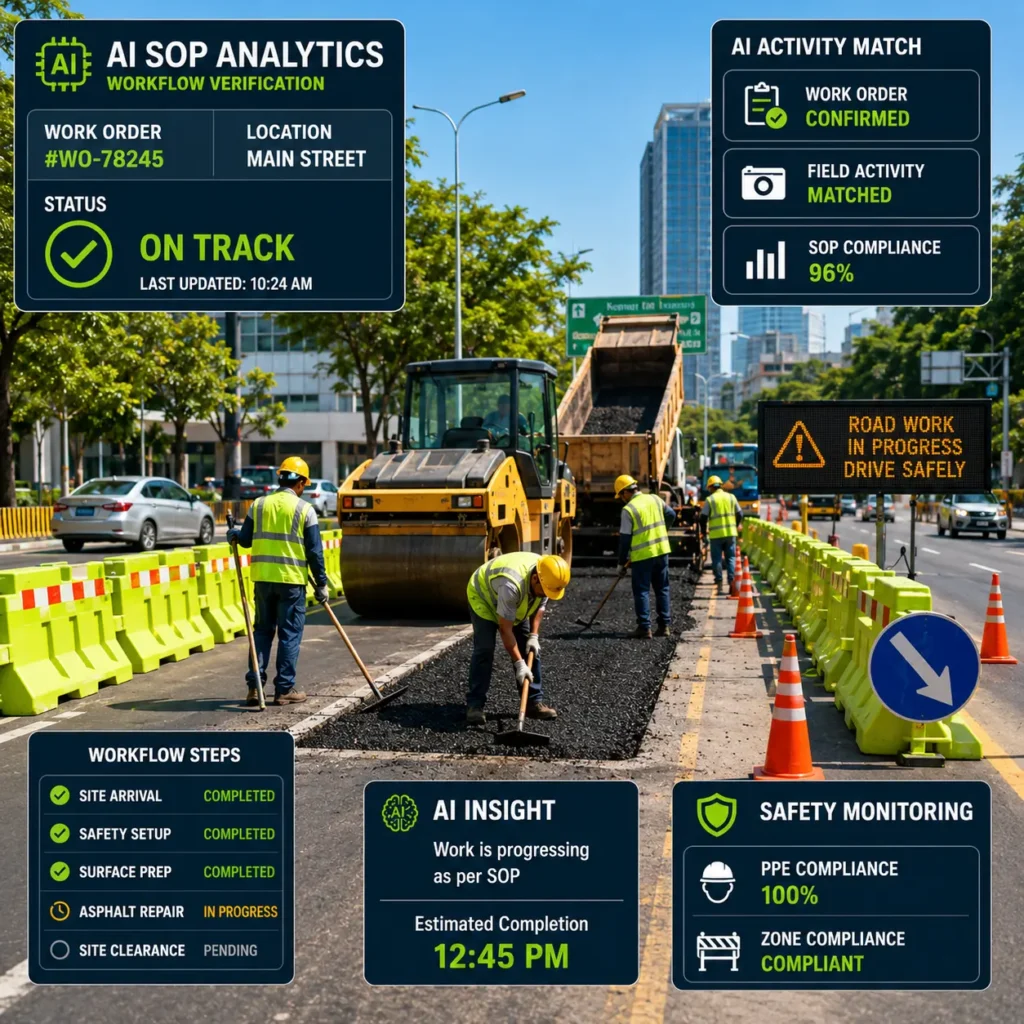
AI based SOP analytics can examine work orders, inspection records, service tickets, completion reports, escalation records, and other available operational data to identify where procedures are breaking down.
Instead of measuring only how many tasks were closed, BMC could examine questions such as:
- Which categories of work generate repeated follow-ups?
- Where are response or completion procedures regularly delayed?
- Which corrective actions remain unresolved?
- Are particular wards, activities, or workflow stages producing recurring exceptions?
This creates a more useful picture of municipal performance.
Finding Bottlenecks Across Departments
A recurring delay may not originate with the team responsible for the final task. It could result from incomplete information at assignment, coordination between departments, equipment availability, approval delays, or an unclear escalation path.
SOP analytics can compare these patterns across operational units and identify where process redesign may have greater impact than simply increasing supervision. This is particularly useful in a municipal organisation where different departments manage interconnected services.
Video Analytics For Physical City Operations
Mumbai’s public infrastructure is constantly changing. Roads become congested, waste collection points become crowded, construction activity affects movement, and public spaces experience different conditions throughout the day.
Video analytics can help BMC interpret selected events from suitable existing camera infrastructure. Rather than requiring staff to continuously watch numerous feeds, systems can flag predefined conditions for human review.
Potential applications include:
- Detecting waste accumulation at designated locations.
- Identifying unauthorised access to restricted municipal facilities.
- Monitoring vehicle or pedestrian movement in defined operational zones.
- Detecting congestion or obstruction around selected municipal work areas.
- Supporting investigation of incidents involving public infrastructure.
The exact use case should depend on camera coverage, image quality, operational priorities, and applicable privacy controls.
A Stronger Approach To Solid Waste Operations
Solid waste management provides a practical example of how the two technologies can complement each other.
SOP analytics could examine whether collection schedules, vehicle checks, route procedures, transfer activities, and reporting requirements are being completed consistently. Recurring exceptions could reveal problems involving particular routes, time periods, facilities, or operational steps.
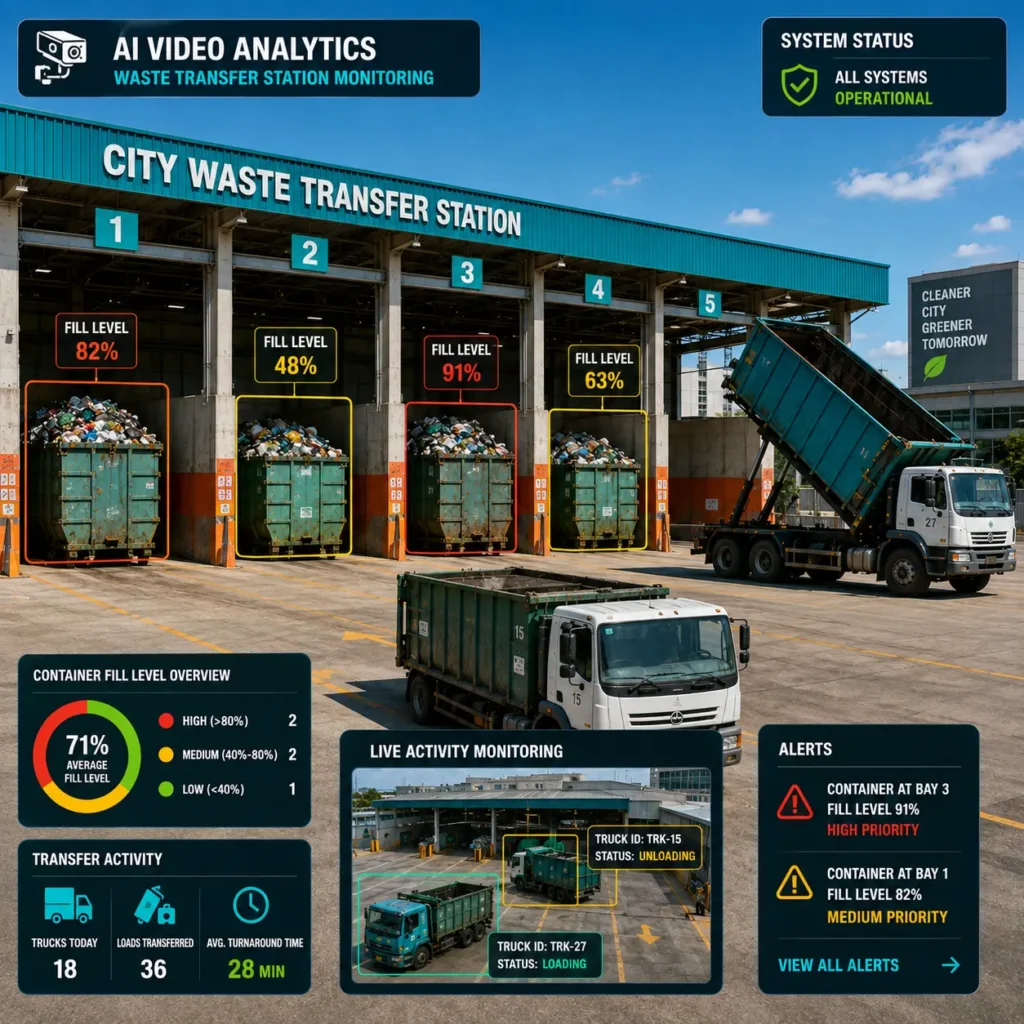
Video analytics could provide additional visibility at selected collection points, transfer areas, or municipal facilities by identifying defined conditions such as accumulation beyond an agreed threshold or activity in restricted areas.
When these signals are combined, BMC can investigate whether repeated service issues arise from collection timing, route constraints, capacity limitations, or process adherence.
Supporting Roads, Works And Public Infrastructure
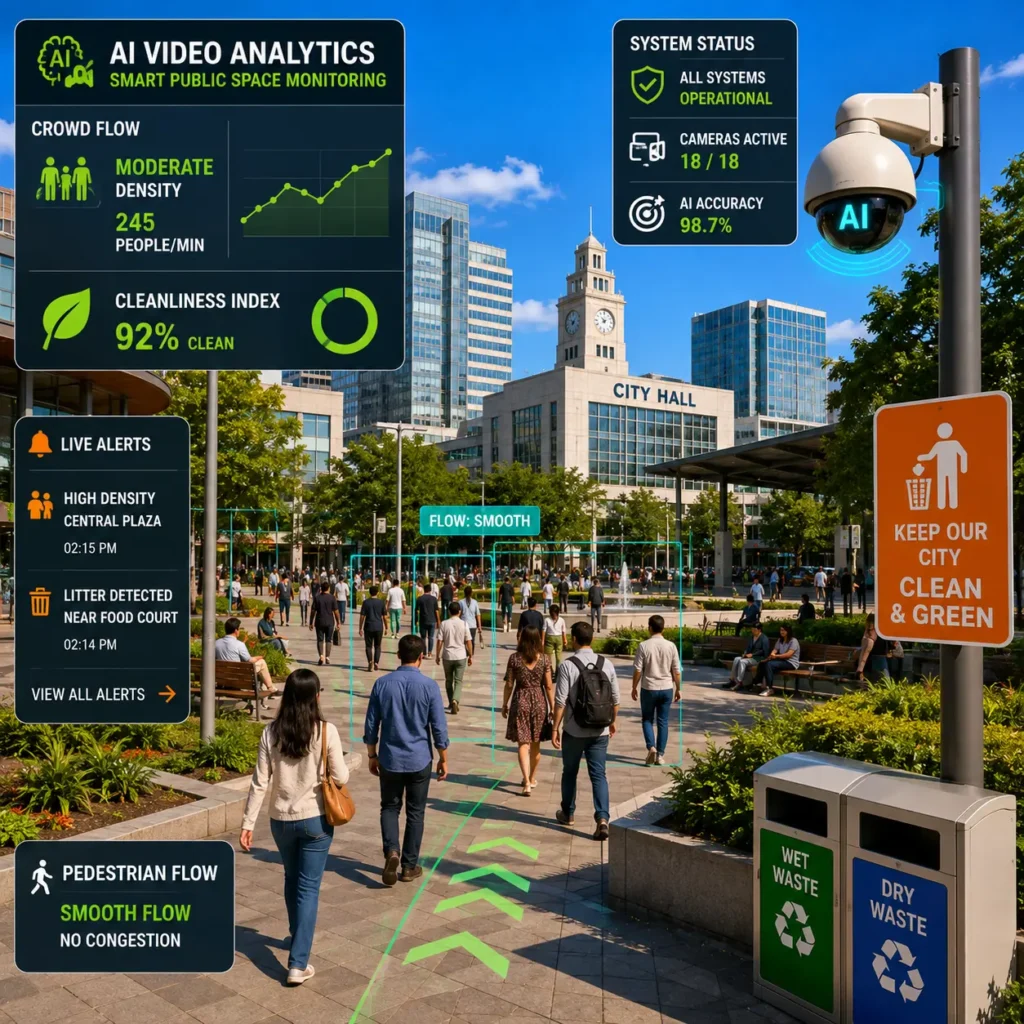
Road and infrastructure maintenance involves inspections, work allocation, field execution, quality checks, and closure documentation. AI based SOP analytics can help identify recurring gaps in inspection frequency, work completion, escalation, or post-work verification.
Video analytics can support selected infrastructure environments by identifying visible conditions such as obstruction of designated work zones, unsafe access, or recurring activity around a monitored location.
The benefit is not simply detecting more events. It is helping field teams distinguish conditions that need immediate attention from those that can be handled through routine workflows.
From Detection To Accountability
AI becomes more useful when its findings feed into an improvement process.
If analytics identifies repeated delays in a particular municipal workflow, BMC can examine the responsible process stage, review relevant evidence, identify the contributing factor, and introduce a corrective measure. Subsequent data can show whether the issue has actually improved.
This creates a measurable management approach based on:
- Service performance
- Process compliance
- Field conditions
- Corrective-action effectiveness
Such a system can help managers move beyond activity counts toward evidence about service quality.
Implementation Should Follow Municipal Priorities
BMC does not need to deploy AI across every department simultaneously. A practical pilot could focus on one clearly defined challenge, such as waste-management monitoring, municipal facility security, work-order compliance, or selected road-maintenance processes.
Before scaling, the pilot should establish baseline performance and define alert-handling responsibilities. Data access, retention, cybersecurity, privacy, human review, and model accuracy should be incorporated into the operating framework.
For BMC, the strongest case for AI based SOP analytics and video analytics is the opportunity to connect administrative processes with conditions visible in the city. Used carefully, these technologies can help identify recurring weaknesses, improve field coordination, strengthen accountability, and support more consistent municipal service delivery.
FAQs
It can analyse work orders, inspection records, completion reports, escalations, and related process data to identify recurring delays, exceptions, and unresolved corrective actions.
Potentially. At suitable monitored locations, it can identify predefined visual conditions related to waste accumulation, facility access, or other operational events, subject to camera suitability and governance requirements.
Yes. SOP analytics can identify recurring process gaps in inspection, work allocation, completion, and verification, while video analytics can provide additional visibility into selected physical work environments.
It should not. AI findings should be treated as decision-support information and reviewed by authorised personnel before operational or personnel decisions are made.